Showing posts with label 1976. Show all posts

MIKE MAKHALEMELE - Greatest Hits 1975-1982

A chronological journey through the early years of South African saxophonist Mike Makhalemele (1938-2000) and a showcase for his five classic albums from the As-Shams Archive catalogue.

Adapting the playlist and artwork of a 1978 compilation issued on the Flame label, Greatest Hits 1975-1982 features remastered tracks from the albums The Peacemaker (1975), The Bull and The Lion (1976), Peaceful Eyes (1976), Walking Spirit (1977) and Blue Mike (1982).

1. Going West 05:02
2. Snowfall 05:25
3. Peaceful Eyes 05:03
4. Walking Spirit (Dancing Soul) 07:36
5. I Remember You (Dedicated to Henry Sithole) 07:46

DIGITAL ALBUM

All Tracks Composed by Mike Makhalemele

Track 1 from the album The Peacemaker (1975):
Tenor Sax – Mike Makhalemele
Recorded by Allan Glen at Satbel Studios
Produced by Mike Makhalemele

Track 2 from the album The Bull and The Lion (1976):
Sax, Voices – Mike Makhalemele, Winston Mankunku Nkozi
Guitar – Trevor Rabin
Piano – Tete Mbambisa
Bass – Ronnie Robot
Drums – Neil Cloud
Recorded by Paul Dobbe at Satbel Studios
Produced by Jo'Burg Records

Track 3 from the album Peaceful Eyes (1976):
Tenor Sax – Mike Makhalemele
Recorded by Tony Butler at Satbel Studios
Produced by Jo'Burg Records

Track 4 from the album Walking Spirit (1977):
Tenor Sax – Mike Makhalemele, Stanley Sithole
Trumpet – Danny Sithole
Keyboards – Jabu Nkosi
Guitar – Paul Petersen
Bass – Tonny Saoli
Drums – Nelson Magwaza
Recorded by Greg Cutler at Satbel Studios
Produced by Julian Laxton

Track 5 from the album Blue Mike (1982):
Tenor Sax – Mike Makhalemele
Piano, Organ – Jabu Nkosi
Bass – Zulu Bidi
Drums, Percussion – Nelson Magwaza
Produced by Rashid Vally

Remastered by Richard Vossgatter 
Compiled and Produced by Calum MacNaughton

Cat. No. KRS 204
℗ 1975, 1976, 1977, 1982 © 2026 As-Shams Archive

BATSUMI - The Hunters 1974-1976

As-Shams Archive Vol. 7: Batsumi - The Hunters 1974-1976
The Hunters 1974-1976 is a digital release that combines Bastumi's self-titled album of 1974 with its 1976 follow-up Moving Along - a complete studio recordings compilation that commemorates the 50th anniversary of the band's discography and celebrates its enduring vitality.

Batsumi was a South African band that carved a singular niche for themselves in the jazz scene of the 1970s. Taking inspiration from the Malombo Jazz Makers of the 1960s, they wove deep Afrocentric threads into their avant-garde tapestry of jazz, a pursuit guided by an ethos of craft and authenticity that sought to reconcile tradition with modernity. The Batsumi name, meaning "The Hunters" in Sesotho, further professed their mission to identify, track down and capture a new aesthetic for African heritage and pride. This they accomplished with two outstanding albums comprising nine remarkable tracks.

Originally issued by the Record and Tape Company and later acquired by As-Shams/The Sun, Batsumi was brought to the attention of 21st-century vinyl enthusiasts in 2011 through the efforts of the Matsuli Music record label. In 2026, former bandleader John Mothopeng continues to help guide and direct the custodianship of Batsumi's recorded legacy with As-Shams Archive.

1. Lishonile (2026 Remaster) 11:27
2. Emapondweni (2026 Remaster) 05:10
3. Mamshanyana (2026 Remaster) 04:41
4. Itumeleng (2026 Remaster) 15:59
5. Anishilabi (2026 Remaster) 03:25
6. Toi-Toi (2026 Remaster) 05:34
7. Moving Along (2026 Remaster) 09:51
8. Evil Spirits (2026 Remaster) 06:29
9. Sister (2026 Remaster) 08:11


All Tracks Composed by Batsumi

Tracks 1-5 from the album Batsumi (1974)
Recorded at Audio Arts
Recording Engineer: Chris van Schouen
Produced by C.B. Matiwane

Tracks 6-9 from the album Moving Along (1976)
Recorded at Satbel Studios
Produced by Batsumi

Personnel:
Lekgabe Abel Maleka – Percussion, Drums
Buta-Buta Zwane – Vocals, Bongos
Maswaswe John Mothopeng – Piano, Acoustic Guitar, Vocals
Sello Lancelot Mothopeng – Organ
Themba Koyana – Tenor Sax
Zulu Bidi – Double-Bass

On Tracks 1-5:
Thabang Masemola – Drums, Flute, Jew's Harp

On Tracks 6-9:
Munich Sibiya – Bongos, Vocals on "Toi-Toi"
Peter Segona – Trumpet
Sipho Mabuse – Flute

Cover Photo (L-R): Thabang Masemola, Buta-Buta Zwane and John Mothopeng (Mamelodi Stadium, August 1974). Licensed courtesy African Pictures.

Remastered by Noah Mintz 
Design and Layout by Ash Pederick
Compiled and Produced by Calum MacNaughton 
(with direction from John Mothopeng)

Cat. No. ASA107
℗ 1974, 1976 © 2026 As-Shams Archive

John Mothopeng in Johannesburg in March 2022
(Photo: Calum MacNaughton)

BATSUMI - Batsumi 77

A primer for the legendary Afro-jazz group Batsumi and a gateway to their two classic albums with edited versions of tracks from the original releases.

Adapting the playlist and artwork of a compilation issued in 1977, Batsumi 77 features remastered tracks from the band's self-titled debut of 1974 and its follow-up Moving Along from 1976. While the 1977 versions of the shortened tracks employed clumsy fade-outs, Batsumi 77 revisits the editing process in 2025 with the precision and creativity offered by modern audio tools.

Batsumi 77 arrives on the cusp of the band's 50th anniversary celebration in 2026 and opens a path to the As-Shams Archive remasters collection The Hunters 1974-1976.

1. Itumeleng (Batsumi 77 Version) 07:47
2. Lishonile (Batsumi 77 Version) 06:01
3. Mamshanyana 04:41
4. Moving Along (Batsumi 77 Version) 05:21
5. Evil Spirits (Batsumi 77 Version) 05:01
6. Toi-Toi 05:33


All Tracks Composed by Batsumi

Tracks 1, 2, 3 originally issued on the album Batsumi (1974)
Tracks 4, 5, 6 originally issued on the album Moving Along (1976)
1, 2, 4, 5 are edited versions of tracks from the original albums

Personnel:
Lekgabe Abel Maleka – Percussion, Drums
Buta-Buta Zwane – Vocals, Bongos
Maswaswe John Mothopeng – Piano, Acoustic Guitar, Vocals
Sello Lancelot Mothopeng – Organ
Themba Koyana – Tenor Sax
Zulu Bidi – Double-Bass

On Tracks 1-3:
Thabang Masemola – Drums, Flute, Jew's Harp

On Tracks 4-6:
Munich Sibiya – Bongos, Vocals on "Toi-Toi"
Peter Segona – Trumpet
Sipho Mabuse – Flute

Remastered by Noah Mintz
Edits by Richard Vossgatter
Compiled and Produced by Calum MacNaughton
(with direction from John Mothopeng)

Cat. No. KRS 203
℗ 1974, 1976, 1977 © 2025 As-Shams Archive

THEMBA - Themba

A nugget of rare South African groove originally issued alongside Bra Sello on the Soweto label in Johannesburg in 1976. A self-titled offering and the group's only album, Themba delivers the quintessential blend of sophisticated jazz improvisation over hip-swinging township pop that gives South African jazz from the 1970s its timeless appeal.

Themba features a skilled ensemble led by Baba “Themba” Mokoena, who appeared on Dick Khoza's landmark Chapita album in 1975 and has gone on to earn a reputation (over the course of a career that spans into the 2020s) as one of the legendary guitarists of his generation. Reissued for the very first time on the cusp of its 50th anniversary, Cinedelic's 2025 edition of Themba is sourced from the original master tapes under license from As-Shams Archive.

Recorded at Satbel Recording Studios
Produced by Greg Siphi Ngcobo
Engineered by Paul Dobbe

Originally issued on the Soweto label
Cat. No. SWA 14017
℗ 1976 © 2025 As-Shams Archive


Themba Mokoena in Green Point, Cape Town in November 2021
(Photo: Calum MacNaughton)

BLACK DISCO - Black Disco & Black Disco 3

With a Yamaha organ and a dream, Pops Mohamed started his musical journey in mid-1970s South Africa as the founder of Black Disco, creating a hip and innovative blend of chill-out jazz with spiritual overtones. Playing original compositions as well as reimagined soul and pop hits, the group appeared on producer Rashid Vally's As-Shams/The Sun label alongside Abdullah Ibrahim and Harari.

On the band's self-titled debut from 1975, Mohamed's cosmic organ is supported by two of the most sought-after session players on the South African jazz scene, Cape Town's sax and flute wizard Basil Coetzee, who had risen to fame in 1974 as one of the soloists on the hit “Mannenberg,” and Sipho Gumede, the young bass prodigy from the city of Durban. The album is a mostly downtempo affair with the drum machine on Mohamed’s organ laying down the beat while the trio soars in blissful improvisational territory.

Bassist Peter Odendaal and drummer Monty Weber join Mohamed and Coetzee for Black Disco 3 in 1976, preserving the New Age lounge aesthetic but allowing the group to flex their jazz chops more adventurously. “Spiritual Feeling” from the debut album is revamped as “Spiritual Feeling Riding the Blue” but the album opener “Dawn” is the centrepiece – a trippy, flute-driven awakening that unfolds over a period of ten minutes.

BLACK DISCO (1975)
Organ - Pops Mohamed
Flute / Tenor Sax - Basil Coetzee
Bass - Sipho Gumede

BLACK DISCO 3 (1976)
Organ / Guitar - Pops Mohamed
Flute / Tenor Sax - Basil Coetzee
Bass - Peter Odendaal
Drums / Bongos - Monty Weber

TETE MBAMBISA - African Day

As-Shams Archive Vol. 4: Tete Mbambisa - African Day

Awarded an honorary doctorate from the University of Cape Town in 2023, pianist Tete Mbambisa (82) is a legendary figure in South African jazz. Supported by the cream of the local scene, his albums from the 1970s are among the most cherished vinyl documents from this golden era. A monumental archival undertaking, African Day compiles unreleased recordings from 1976 to resurrect a "lost" Tete Mbambisa double album that falls between his seminal works Tete's Big Sound (1975) and Did You Tell Your Mother (1979).

Born in 1942 and raised in South Africa's Eastern Cape province, Tete Mbambisa’s childhood home served as an informal tavern where social gatherings orbited around the family's carefully curated music collection with live performances by a local pianist. Growing up in this environment, his musical roots are embedded in marabi, the syncopated piano sound that blended cues from American jazz, blues and ragtime with the cultural sensibilities that shape modern South African jazz.

A self-taught musician, it was as leader of the vocal group The Four Yanks in the early 1960s that Tete Mbambisa’s music career began in earnest. With encouragement from Abdullah Ibrahim, he dedicated himself to the piano and went on to record with The Soul Jazzmen in 1969. Mbambisa's two solo recordings from the 1970s were produced by Rashid Vally for the independent As-Shams/The Sun record label. With an abundance of strong material but limited resources, some of the label's prospective releases were not issued at the time of recording. Featuring the intended artwork commissioned for the project in 1976, African Day marks the first major unveiling of unreleased gems from the As-Shams master tape archive.

A. African Day 17:41

B1. Khumbula Jane 3:25
B2. Siviwe 5:13
B3. Kohinoor 5:12
B4. Mr. Mecca 4:58

C1. Siyanda 6:44
C2. Umsenge 7.55

D1. Relaxin' 8:49
D2. Untitled (For Duke Makasi) 6:22

Piano – TETE MBAMBISA
Bass – SIPHO GUMEDE
Drums – GILBERT MATTHEWS
Tenor Sax – DUKE MAKASI
Tenor Sax / Flute – BASIL COETZEE (A, B)
Alto Sax – BARNEY RACHABANE (A, B) 
Trumpet – DENNIS MPALE

A, B
Recorded 27 February 1976 at Satbel Studios
Johannesburg, South Africa
Recording Engineer: Peter Thwaites

C, D
Unannotated session recorded in 1976.

Composed by TETE MBAMBISA
(except "Khumbula Jane" by Mackay Davashe)
Produced by RASHID VALLY

Cover Artwork by ZULU BIDI
(sourced courtesy Chris Albertyn)

ON PHYSICAL EDITIONS
Back Cover Photo by IAN BRUCE HUNTLEY
(under license from african.pictures)
Gatefold Photo by PERS ENGLUND
(used with permission)

Tape Transfers by Rob Allingham
Audio Mastering by Noah Mintz
Design & Layout by Rouleaux van der Merwe
Compiled & Produced by Calum MacNaughton
(with direction from Tete Mbambisa & Rashid Vally)

Cat. No. ASA104
℗ 1976 © 2024 As-Shams Archive

THE HAL SINGER JAZZ QUARTET IN SOUTH AFRICA - Soweto to Harlem

When the U.S. State Department announced in the mid-1970s that they were sponsoring a South African tour for the Oklahoma-born, Paris-based saxophonist Hal Singer, producer Rashid Vally took note. Even though his nascent record label As-Shams/The Sun (established in 1974) was making waves on the local scene, the idea of commissioning a recording from an international artist was a ballsy idea. With a discography that stretched back to the 1950s, Hal Singer was already somewhat of a legacy artist by 1976. Vally was well-versed on Singer’s accomplishments and specifically enamoured by his composition “Blue Stompin’,” which appeared on a Prestige album from 1959 that had struck a chord in South Africa.

With his irresistible charm, Vally managed to coax Singer into a studio in Johannesburg to record a new version of “Blue Stompin’” with South African sax star Kippie Moeketsi, which became the title track of a 1977 album by Moeketsi. The recording session also yielded an album’s worth of new material by Hal Singer and his quartet that took its name from a track inspired by Singer’s trip to South Africa entitled “Soweto to Harlem.” Released in 1976 and only available in South Africa, Soweto to Harlem captures a laid-back, cheeky and nostalgic rhythm and blues set from the Hal Singer Quartet that is unlikely to have emerged for a different target market. 

Cinedelic’s 2023 edition of this impossibly rare album is sourced from the original tape masters and presents it on vinyl internationally for the very first time. The reissue follows Singer’s passing at the age of 100 in August 2020 as we contemplate and celebrate his extraordinary contribution to jazz in the United States and beyond.

Hal Singer – Tenor Sax
Alain Jean-Marie – Piano
August "Gus" Nemeth – Bass
Oliver Johnson – Drums

Produced by Rashid Vally
Photographs by Ronnie Kweyi

Originally issued in South Africa by As-Shams/The Sun
℗ 1976 © 2023 As-Shams Archive

The MANKUNKU-MAKHALEMELE Trilogy

Three As-Shams Archive albums from the mid-70s that trace the interweaving discographies of saxophonists Winston Mankunku Ngozi and Mike Makhalemele. Backed by The Cliffs, Alex Express was Mankunku's long-awaited 1975 sophomore album that followed the lauded Yakhal' Inkomo with the Mankunku Quartet from 1969. Also appearing in 1975, The Peacemaker was Makhalemele's debut – a landmark release announcing the arrival of a new saxophone colossus. The Bull and the Lion from 1976 saw these two figureheads joining forces for one of the epic collaborations of South African jazz in the 1970s. Restored, remastered and reissued in partnership with We Are Busy Bodies.

MIKE MAKHALEMELE & WINSTON MANKUNKU NGOZI - The Bull and the Lion


Bringing together Johannesburg’s two saxophone titans for a supergroup recording project was a visionary move by Jo’Burg Records in 1976. Following the success of Makhalemele’s debut The Peacemaker and Mankunku’s long-awaited sophomore release Alex Express, which both appeared in 1975, the bar had been set very high. Enamoured by their jazz contemporaries, the session was concocted by members of an exciting new South African rock group called Rabbit, who formed a backing group consisting of guitarist Trevor Rabin, bassist Ronnie Robot and drummer Neil Cloud alongside jazz pianist Tete Mbambisa. Recorded at the state-of-the-art Satbel Music Recording Studios, the inspired performances of this diverse cast of young South African artists at the height of their powers was captured with exquisite fidelity. Packaged as The Bull and the Lion, the album title references Mankunku’s signature composition “Yakhal’ Inkomo” (which means “the bellow of the bull”) and Makhalemele’s stage name “Ratau” (meaning "lion"). The pairing of Mankunku and Makhalemele stands with Moeketsi/Matshikisa and Pillay/Coetzee as one of the epic collaborations of South African jazz in the 1970s.

Ronnie Robot – Bass
Neil Cloud – Drums
Trevor Rabin – Guitar
Tete Mbambisa – Piano
Mankunku & Makhalemele – Voices

A Jo'Burg Records Production
Recorded at Satbel Music Recording Studios
Recording Engineer: Paul Dobbe
Photography by Rent-a-Studio

Originally issued in South Africa by Jo'Burg Records
℗ 1976 © 2023 As-Shams Archive

The MOKETSI-MATSHIKIZA Trilogy


Three As-Shams albums from the mid-1970s that trace the interweaving discographies of saxophonist Kippie Moeketsi and pianist Pat Matshikiza. Tshona! was their collaborative effort from 1975, supported by Basil Coetzee on tenor and with Beaters/Harari holding down the rhythm section. Matshikiza would then invite Moeketsi to feature on his solo debut Sikiza Matshikiza in 1976, this time backed by Spirits Rejoice. Matshikiza later pops up on the Harold Baker/Charles Hodges composition "Hang On There" covered on Moeketsi's Blue Stompin' album in 1977. Restored, remastered and reissued in partnership with We Are Busy Bodies.

SATHIMA BEA BENJAMIN - African Songbird

Original 1976 sleeve notes by Bruno Rub:

When asked to give some information about her career she replied, in a letter, with these words: "I tried hard to write about myself and music, and why I sing, and then it all just sounded too silly, so I ended up writing poems and a few other thoughts."

The statement – so it seems to me – is typical of the personality who made it: Bea Benjamin, the singer from South Africa, finds sufficient expression in music and poetry. The following short poem can be taken as her program, so to speak:

i love to sing
i love to live
i live to love
i sing to LOVE

One is almost afraid to add more to these lines. Music and poetry speak for themselves. Any attempt at an analysis is basically a use of violence, over-powering the subject.

Bea Benjamin was born and raised in Cape Town, South Africa. She began her professional career singing in 1959, when she toured South Africa with the Harold Jephta Quartet. In 1960, she joined the Dollar Brand Trio, and a year later went on tour with the Jazz Epistles, which included Dollar Brand, Kippie Moeketsi and Hugh Masekela. In 1962 she came to Switzerland with the Dollar Brand Trio, appeared at the Zurich jazz-club "Africana", sang on radio and television in Lausanne and made guest-appearances in Berne and Geneva. Later that year she moved to Scandinavia. In Denmark she made radio and T.V. appearances with the Dollar Brand Trio and did extended engagements at the "Montmarte" jazz-club in Copenhagen. She did concerts in Stockholm, Oslo and Helsinki. Duke Ellington engaged her for recordings in Paris, on the Reprise label; the tapes, on which Ellington himself as well as Billy Strayhorn can be heard, were never issued as a recording, regrettably. In 1964 Bea was a guest at the festivals in Molde (Norway), Antibes (Riviera) and Ascona (Switzerland), and in 1965 she appeared with Ellington at the Newport Jazz Festival. With Dollar Brand she gave a concert in the old Carnegie Hall, again with Ellington there were concerts in Vermont and Maryland. Other concert and television dates, as well as appearances at U.S. colleges, followed in 1966. In 1967/68 she was on a South African tour, with Dollar Brand. In 1970 she and Dollar Brand founded the Marimba School of Music, in Mbabane, Switzerland. With the group "Music of Universal Silence", founded by Dollar Brand and Don Cherry, she appeared in Denmark in 1972, as well as at that year's "Music Forum" in Austria. Add to this her participation in the Jazz-Vespers with Duke Ellington, in St. Peter's Church, New York, on December 24, 1972. In January 1973 she gave a concert with the Sam Rivers Quartet in New York, as well as several concerts in Switzerland.

The "New York Times" music critic, John S. Wilson, writes about the singer, who in her concerts gives preference to ballads, compositions by Duke Ellington, and spirituals: "Miss Benjamin has a soft, warm, beautifully projected voice and a quietly dramatic quality that are extremely effective in developing a song in a quiet, subdued mood". Dollar Brand, who is Bea's husband, is also one of her most frequent accompanists. She herself formulates his qualities as follows: "To work with a 'man of music' like Dollar Brand is a blessing, a challenge and always a learning experience. As an accompanist he has that very rare and extremely special gift of 'setting your soul free'".

All words and music by Sathima Bea Benjamin
Arranged and conducted by Dollar Brand

"Africa"
Vocals - Sathima Bea Benjamin
Bass - Louis Spears / Basil Moses / Lionel Beukes
Drums - Doug Sides / Monty Weber
Trumpet - Billy Brooks
Tenor Sax / Flute - Basil "Mannenberg" Coetzee
Piano - Dollar Brand

"Music"
Vocals - Sathima Bea Benjamin
Flute - Basil "Mannenberg" Coetzee
Bass - Louis Spears / Basil Moses / Lionel Beukes
Drums - Doug Sides / Monty Weber

"African Songbird"
Vocals - Sathima Bea Benjamin

DEDICATIONS
AFRICA - Well it speaks for itself.
MUSIC - Dedicated to my husband Dollar Brand, who has inspired me and taught me so much musically.
AFRICAN SONGBIRD - Dedicated to the late Duke Ellington.

Produced by Rashid Vally
Cat. No. GL 1839
℗ 1976 As-Shams/The Sun

BLACK DISCO - Night Express

Pops Mohamed leaned heavily on his Yamaha Electone's "auto rhythm section" to produce the Timmy Thomas-inspired signature drum machine sound that characterised Black Disco's 1975 self-titled debut. Following in 1976, Night Express took the group to new heights with the inclusion of drummer Peter Morake (Anchors/Dollar Brand/Roots) on most of the tracks.

In addition to Mohamed on organ, founding members Sipho Gumede (bass) and Basil Coetzee (sax/flute) round out the Black Disco sound with memorable original compositions and a smattering of unique takes on unlikely covers. The result is an album more deeply rooted in South African jazz with a title track that has become one of the most widely admired artefacts of downbeat 1970s Afro-funk.

Organ - Pops Mohamed
Tenor Sax & Flute - Basil Coetzee
Bass - Sipho Gumede
Drums - Peter Morake

Recorded in the Gallo Studios
Recording Engineer - Peter Ceronio

Produced by Rashid Vally
Cat. No. GL 1831
℗ 1976 As-Shams/The Sun

PAT MATSHIKIZA - Sikiza Matshikiza


Born in Queenstown in South Africa's Eastern Cape province in 1938, Patrick Vuyo Matshikiza was raised in a musical family. His uncle Todd Matshikiza was a jazz columnist for Drum Magazine in the 1950s and composed the music for King Kong - the all-black musical from 1958 that played in London's West End and launched the career of singer Mariam Makeba. Pat was educated at St. Mathews, an historic mission school in Keiskammahoek, where he played organ and graduated with a teacher's diploma. He migrated to Johannesburg in 1962 and joined the community of professional black musicians that orbited Dorkay House, headquarters of Union Artists and the African Music and Drama Association. It was here that Matshikiza was enlisted as a pianist for the Jazz Dazzlers, a big band led by esteemed saxophonist Mackay Davashe. Matshikiza would then go on to join the Early Mabuza Quartet, a group that shared first prize with the Malombo Jazz Man at the Castle Lager Jazz Festival in 1964.

Recording for the As-Shams/The Sun label in the 1970s, Pat Matshikiza released the collaborative album Tshona! with sax giant Kippie Moeketsi in 1975. The album was followed in 1976 by Sikiza Matshikza, Pat's solo debut with Moeketsi appearing as a featured artist. The personnel on the album were an early iteration of the group that would become Spirits Rejoice in 1977, with Duke Makasi on tenor sax, George Tyefumani on trumpet, Sipho Gumede on bass, Gilbert Mathews on drums and Sandile Shange (who appears alongside Matshikiza and Moeketsi on the album's cover photo) on guitar.

In the 1980s, Matshikiza withdrew from the jazz scene to pursue a more stable income as a resident pianist on the hotel circuit. He resurrected his jazz career in the 2000s, performing in Johannesburg clubs and releasing the live album Originals (2004) and retrospective album Seasons, Masks and Keys (2005). He retired in 2011 after suffering a stroke and his health steadily declined until his death in 2014. Pat Matshikiza's mid-70s recordings mark a high point in his career and are essential documents in the history of South African jazz on vinyl. With these reissues, we hope to bring his artistic legacy to prominence and share his work with lovers of jazz around the world.

Pat Matshikiza - Piano
Kippie Moeketsi - Alto Saxophone
Duke Makasi - Tenor Saxophone
George Tyefumani - Trumpet
Sandile Shange - Guitar
Sipho Gumede - Bass
Gilbert Mathews - Drums

All tracks composed by Pat Matshikiza
Recorded at Gallo Studios
Recording Engineer: Peter Ceronio
Produced by Rashid Vally
Cat. No. GL 1857
℗ 1976 © 2022 As-Shams/The Sun

BALUMBI - Talkative Drums

When label director Rashid Vally first began pondering an As-Shams archival series to ensure that unreleased works were properly documented and made available publicly, there was one particular project at the front of his mind - a collaboration with two young musicians who left a strong impression and an incomplete project that continued to itch despite the decades that had past.


Channeling Malombo by way of Sun Ra, Balumbi was an avant-garde percussion duo made up of Levitt Mokgale and Panic Ike Maphisa and their enchanting minimal sound was transcendental yet hewn from the rough textures of rural Africa. They had a compelling mindset and backstory to boot, being proficiently trained in judo and busy pioneering an Africanised style of the Japanese martial art. Vally was smitten.

Driven by the gut rather than the bottom line, Balumbi's Talkative Drums LP was recorded, sequenced and mastered in 1976 but ultimately never manufactured. As-Shams/The Sun had overextended itself during the creative outpouring of that immensely productive year and the album was sidelined but never completely forgotten. After 45 years of gestation, As-Shams Archive proudly presents Talkative Drums with label catalogue number SRK 897247 as a digital album exclusive to our Bandcamp platform. Mastered from the original archival tape, the release is accompanied by the original photo and unedited notes submitted by the band.

Composed by Panic Ike Maphisa
Performed by Panic Ike Maphisa & Eric Miya
Recorded at Gallo Studios, Johannesburg
Produced by Rashid Vally
Cat. No. SRK 897247
℗ 1976 © 2021 As-Shams/The Sun

TETE MBAMBISA - Tete's Big Sound

NOVEMBER 2021: The album Tete’s Big Sound emerged during a golden age for local South African jazz recordings in the 1970s. Issued by the independent As-Shams/The Sun label in 1976, it was the first album attributed to pianist Tete Mbambisa as a solo artist. Yet, Mbambisa was already a seasoned composer, arranger, bandleader and performer by the mid-1970s - an artist at the peak of his powers who had patiently cultivated his craft to create his enduring debut.

Born in 1942 and raised in South Africa's Eastern Cape province, Mbambisa’s childhood home also served as the family’s small business - an informal tavern where social gatherings orbited around his mother’s carefully curated music collection and live performances by a local pianist. His musical roots are thus deeply embedded in marabi - the syncopated piano sound of urban black South African culture in the 1950s that took cues from American jazz, blues and ragtime while fostering the sensibilities that would shape modern South African jazz.

A self-taught musician, it was as the leader of the vocal group The Four Yanks that Tete Mbambisa’s music career began in earnest in the early 1960s. Mbambisa humbly recalls to this period as his education in harmonic structure but his special talent for musical arrangement was quickly recognised and widely admired. With encouragement from Abdullah Ibrahim, he dedicated himself to the piano and was a member of the award-winning Swinging City Six ensemble in 1963 (with the added distinction of receiving the Cold Castle Festival’s piano prize). Mbambisa went on to assemble and record with The Soul Jazzmen in the late 1960s and the group’s sole release Inhlupeko (1969) joined Winston Mankunku’s Yakhal' Inkomo (1968) and Chris Schilder’s Spring (1969) to create a wave of aspirational modern South African jazz albums that expanded the ambitions of artists and labels in the 1970s.

As a record store owner with a direct relationship to the jazz scene, producer Rashid Vally led the charge for the independent labels with early 1970s releases by Gideon Nxumalo and Abdullah Ibrahim on Soultown Records. Rebranding as As-Shams/The Sun for the release of Ibrahim’s Mannenberg - ‘Is Where It’s Happening’ in 1974, Vally’s breakout success found himself at the helm of an autonomous production enterprise with access to mainstream studios, manufacturing and distribution. As-Shams/The Sun quickly earned a reputation as the home of the vanguard of local South African jazz, offering an unmatched platform for artists to create without compromise and attracting a host of South African jazz luminaries, including Mbambisa, as a consequence.

Leading on piano, Mbambisa enlisted the support of a five-piece brass section with guitar, bass and drums for the January 1976 recording session at Gallo Studios in Johannesburg that yielded Tete’s Big Sound. The arrangements were meticulously prepared and confidently executed but there was more at stake than personal reputation for Mbambisa as a jazz creator in 1970s South Africa as Vusi Khumalo, writer of the album’s original liner notes, passionately extolls. Tete’s Big Sound was an affirmation of black excellence in modern arts and culture that calmly dismantled the doctrine of a regime that denied equality to black citizens on the basis of race. And while much of Mbambisa’s early work was guided by black heroes from the United States, Tete’s Big Sound articulated a voice that was both proudly South African and unmistakably his own. Reissued in collaboration with Tete Mbambisa and As-Sham/The Sun, Mad About Records’ 2021 edition of Tete’s Big Sound marks the album’s very first international release.

Using a quartet format, Mbambisa recorded a second album for As-Shams/The Sun entitled Did You Tell Your Mother in 1978 and unreleased sessions from this period have yet to be fully issued. In recent years, Mbambisa has released a pair of live recordings in partnership with the Music Research Centre at the University of York. Turning 80 in 2022, Tete Mbambisa lives in Cape Town and continues to enchant audiences with ad hoc special appearances.

All Music Composed & Arranged by Tete Mbambisa

Tete Mbambisa – Piano
Barney Rachabane – Alto Sax
Duku Makasi – Tenor Sax
Aubrey Simani – Tenor Sax
Freeman Lambatha – Baritone Sax
Tex Nduluka – Trumpet
Enoch Mthalani – Guitar
Sipho Gumede – Bass
Dick Khoza – Drums

Recorded in the Gallo Studio
Recording Engineer: Peter Ceronio
Produced by Rashid Vally

Cat. No. GL 1830
℗ 1976 As-Shams/The Sun

DICK KHOZA - Chapita • EXPANDED NOTES


With Dick Khoza wrapped in a tribal blanket on the album’s cover, Chapita was a bold proclamation of modern African musical creativity and the sleeve's brief liner notes detailed the incredible journey he took to make what is his only recorded output. A recent archival discovery revealed the unedited, handwritten notes that Khoza submitted during the LP's production. As-Shams Archive presents this fascinating document for the very first time in 2021, sharing Khoza's freewheeling style as a storyteller and providing a rare personal South African jazz narrative. His words remind us of the creative risks he took, the relationships he fostered and the spirit he channelled to create this piece of South African music history.

DICK KHOZA - Chapita

AUGUST 2021: Dick Khoza's family migrated to South Africa from Malawi and he spent his youth in Durban. He joined the army in the 1940s before throwing caution to the wind in pursuit of music, decamping for Port Elizabeth where he was able to study, network and build a foundation for his career. As a working musician, Khoza's peregrinations took him to Cape Town and eventually Johannesburg, where he was employed at the Pelican Club in Soweto. As the nightclub's stage manager, he was responsible for overseeing cabaret shows and jam sessions and played an instrumental role in cultivating the era's soul, funk and jazz scene. After participating as a session musician for the As-Shams recording of Tete Mbambisa's Big Sound album and in the wake of a life-changing trip to Malawi following his father's death, Khoza convinced Rashid Vally to get behind his new Afrocentric sound and assembled his Pelican musical compatriots at Gallo Studios in September 1976 to put it down. With Dick Khoza wrapped in a tribal blanket on the album's cover, Chapita was a bold proclamation of modern African musical creativity and the sleeve's brief liner notes detailed the incredible journey he took to make what is his only recorded output.

Dick Khoza - African Drums
Bethuel Maphmulo - Bass Guitar
Themba Mehlomakulu - Trumpet
Mac Mathunjwa - Electric Piano
Themba Mokoena - Lead Guitar
Aubrey Simani - Tenor Sax
Ezra Ngcukana - Tenor & Soprano Sax
Willie Nettie - Trombone
Negro Mathunjwa - Drums
Aubrey Mahlangu - Tenor Sax
Joe Zikhali - Rhythm Guitar
Edgar Dikgole - Vocal

Recording Engineer: Peter Ceronio
Recorded at Gallo Studios
Produced by Rashid Vally
Cat. No. GL 1873
℗ 1976 As-Shams/The Sun

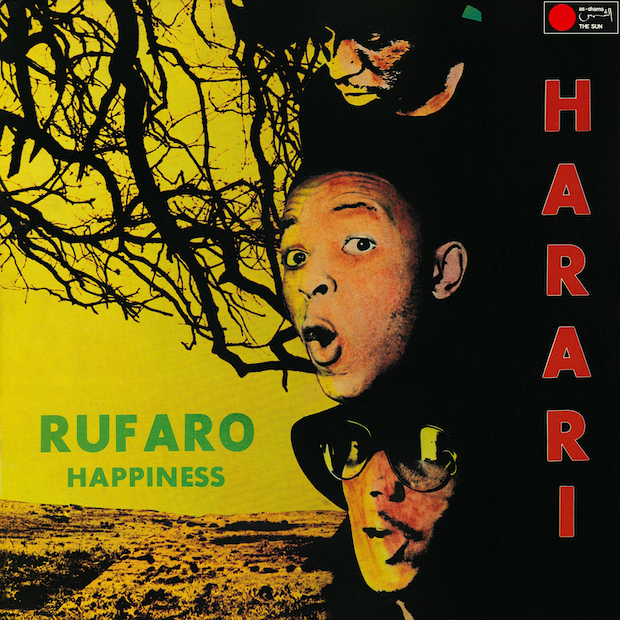
HARARI - Beaters & Rufaro


Keyboards • Vocals - Selby Ntuli
Bass - Alec Khaoli
Drums - Sipho Mabuse
 
Recorded at Gallo Studios
Engineer: Peter Cerenio
Produced by Rashid Vally
Original Release 1975 • Cat. No. GL 1814
 

Keyboards • Vocals - Selby Ntuli
Bass - Alec Khaoli
Drums - Sipho Mabuse
 
Recorded at Gallo Studios
Engineer: Peter Cerenio
Produced by Rashid Vally
Original Release 1976 • Cat. No. GL 1874
 
FEBRUARY 2021: Friends and bandmates from schooldays, Selby Ntuli, Sipho Mabuse and Alec Khaoli already had a pair of sturdy rhythm and blues records on CBS under their belt by the mid-70s but it was over the course of two formidable albums with As-Shams in 1975 and 1976 that they transitioned into the Afro-rock juggernaut that would forge South Africa's most unique and successful modern dance sound of the era. It was also over the course of these two albums that the Beaters would transition into Harari, taking on the identity of their signature song, which in turn took its name from what would later become the capital city of Zimbabwe. Mastered from original tapes with beautifully restored artwork and comprehensive notes, Beaters - Harari (1975) and Harari - Rufaro (1976) are due for reissue by Matsuli Music on 1 March 2021.