Showing posts with label 1990. Show all posts

POPS MOHAMED - Kalamazoo EP

JULY 2021: Having created albums together as Black Disco in the 1970s and Movement in the City in the 1980s, Pops Mohamed and Sipho Gumede returned to the studio yet again in 1990 to record what many believe is Mohamed's most enduring composition. "Kalamazoo" heralded the return of a classic South African jazz sound that distilled marabi and goema and like its forebear, Abdullah Ibrahim's "Mannenberg" from 1974, took inspiration from the streets and its name from a vibrant urban community. The township in Boksburg's Reiger Park neighbourhood is where it was happening and Mohamed captured its vibe with incredible pathos at the outset of a new decade of hope during the turbulent years preceding regime change in South Africa in 1994.

The recording was produced by Mohamed and Gumede, who enlisted the accompaniment of Mzi Khumalo on saxophone and Ian Herman on drums and sought out engineer Felani Gumbi to craft the sound. The session yielded three tracks that occupy Side A of the original 1990 vinyl release from Sun Music. Side B culled archival material from Movement in the City and included a track from Mohamed's 1985 EP Inner City Funk. With this digital release, we present Kalamzoo as just the core EP of new material from 1990. The filler tracks can now be found in their appropriate places in the As-Shams Archive digital catalogue.

B1. "Spring Fever" appears on Inner City Funk
B2. "Blue Sunday" appears on Movement in the City
B3. "Eventide (Happy Feelin')" appears on Movement in the City 3

In addition to its title track, Kalamazoo includes another tribute to the marabi era by way of "Kort Street Bump Jive," referencing the location of the Kohinoor World of Music and highlighting the store's role as the standard bearer of the jazz community in Johannesburg. The EP is rounded out by a dedication seeped in South African gospel and blues entitled "Song for Emma." Kalamazoo was the inaugural release of a Kalamazoo Productions imprint produced by Mohamed and Gumede for Sun Music Company that includes the albums Evelinah Wami (1990) by the group Jika and Gumede's own Banana City Jive (1991). A series of Kalamazoo follow-up albums emerged from 1999 to 2003 on Sheer Sound and Mohamed has since adopted Kalamazoo Music as the name of own label.

All Songs Composed by Pops Mohamed
Keyboards - Pops Mohamed
Bass - Sipho Gumede
Alto Sax - Mzi Khumalo
Drums - Ian Herman
Produced by Sipho Gumede & Pops Mohamed
Engineered & Mixed by Felani Gumbi
Cover Photo by Lauren Shapiro
Artwork Mural by Joseph Phekela (a student of the FUBA Academy)
Executive Producer: Rashid Vally
Cat. No. KMH 1001
℗ 1990 Kalamazoo Productions for Sun Music Company

••••••••••••••••••••••••••••••

"I met Basil Coetzee and Sipho Gumede in the mid-70s when we recorded my first LP together entitled Black Disco. Several LPs followed after that, trying to achieve a South African jazz sound that was strong and fresh. Basil and Sipho helped with that sound. We all lived for the music and what we were doing meant a lot to us and our followers. In 1990, Sipho and I got together and discussed the importance of recording yet another LP, which would be "the one." Sipho suggested that we get a very good drummer (Ian Herman from Tananas) and an engineer who would be capable of helping shape the sound. We chose Felani Gumbi. The result was Kalamazoo and it became a huge success. It was named after is a very tiny township at the entrance of Reiger Park in Boksburg (which was a part of my upbringing). The album has been out of print for almost three decades and African jazz lovers from around the country and abroad have been putting pressure on me to reissue it. And now my friends, I have heard you. May this album bring you many years of enjoyment and good memories.

I dedicate this reissue to the following musicians (all now late): Sipho Gumede, Basil "Mannenberg" Coetzeee, Robbie Jansen, Monty Weber and sound engineer Felani Gumbi. My heartfelt thanks to the families of the brothers who we have lost. I would also like to thank Rashid Vally for the role he played in the Kalamazoo series. Ian Herman for his amazing drumming on the album. Mzi Khumalo for playing a very big part on saxophone with his thundering melodies and solos. My family for always being there. Damon Forbes for always pushing me. All my friends on Twitter, Facebook and Instagram for encouraging me not to quit. Radio stations and broadcasters for keeping me relevant. Last but not least, I would like to thank Almighty God for making everything in my life possible, Without Him, there is no me." - Pops Mohamed (from the liner notes to the 2019 CD edition of the complete album on Kalamazoo Music).

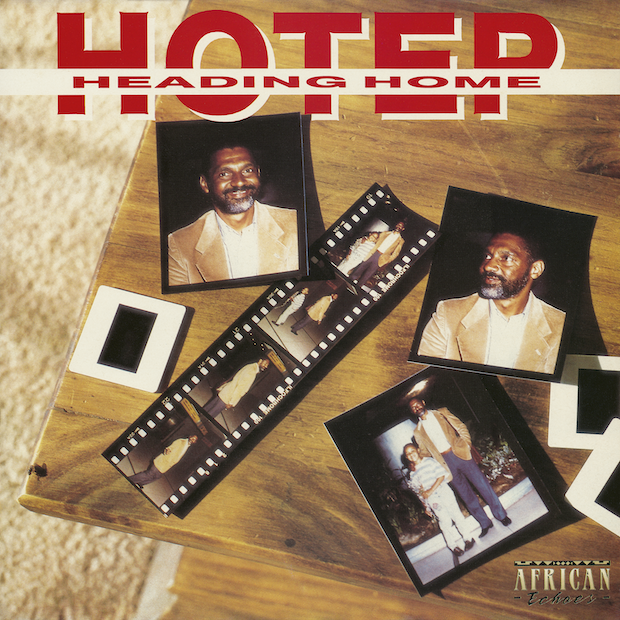
HOTEP IDRIS GALETA - Heading Home

Monday 7 June 2021 marks what would have been the 80th birthday of pianist, composer, educator and cultural industries advocate Hotep Idris Galeta (1941-2010) – a figure whose contributions to South African jazz at home and abroad have yet to be fully documented and understood.

Galeta's 1990 magnum opus Heading Home was recorded in Cape Town during one of his first trips back to South Africa after living in exile for 30 years and he shines as a frontman and composer with the formidable backing of Khaya Mahlangu on sax, Spencer Mbadu on bass and Monty Weber on drums. Issued on the African Echoes imprint, Heading Home helped shape the profound themes and tone of South African jazz in the 1990s and, over thirty years later, Galeta's compositions still exude a timeless vitality.

A1. Heading Home 06:29
A2. Sister Fania 05:44
A3. NY 139 04:27
A4. Tiekkie Draai 03:16

B1. Happy Hanna 05:05
B2. District Six 04:42
B3. Cape Town Summer 05:54

Hotep Idris Galeta – Piano
Khaya Mahlangu – Tenor & Soprano Saxes
Spencer Mbadu – Bass Guitar
Monty Weber – Drums

All Compositions by Hotep Idris Galeta
(Except "Happy Hanna" composed by Hotep Idris Galeta and Caiphus Semenya)
Published by Ceilbar Music and Sun Music Publishers
(Except "Happy Hanna" published by Almo Irving Music and Mungale)

Executive Producer: Rashid Vally
Recorded at U.C.A. Studio in Cape Town by Murray Anderson
Mastered by Sam Wingate and Supervised by Eirfaal Gillan at Decibel Studio in JHB
Art Direction and Cover Design by Eirfaal Gillan
Photography: Mariam Gillan

Special thanks to Christian Syren for co-ordinating the recording sessions in Cape Town. Rashid Lombard for the photography of Spencer Mbadu and Monty Weber.

ORIGINAL LINER NOTES:

The tragedy of exile is a theme which has underpinned the lives of many South Africans, but for artists and musicians, the personal pain of separation, is further aggravated: uprooting from the community in which their art evolved necessitates a redefining, a redevelopment of the artform within the context of the new material reality which surrounds them.

So it has been for the generation of South African musicians who left South Africa in the early 1960's – they have charted their musical development in exile, nurturing severed roots for the appreciation of foreign audiences and fellow exiles. Back home, different forces have shaped the music.

After thirty years in exile, pianist Hotep Idris Galeta returned home to Cape Town in January 1990 to record and perform with a quartet of local musicians. This album celebrates the homecoming not only for Galeta, but for those in South Africa who have had that nagging awareness that the repatriation of a very big slice of our musical heritage is long overdue.

Born in the Cape Town suburb of Crawford in 1940, Galeta was raised on a musical diet ranging from bebop and marabi to vastrap and tikkiedraai. But by the age of 20, Galeta was hungry to gain a broader musical education: "I just felt that I was at an impasse because of the situation here. There was no inspiration." A year later, he moved to New York, where  he spent time in an army band, studied theory, and soon started to play with people like High Masekela, Jonas Gwangwa and Morris Goldberg.

Since leaving Cape Town thirty years ago, Hotep Idris Galeta has recorded several albums with compatriot Masekela, as well as American musicians such as Herb Alpert. His own quest for musical education has motivated a career as teacher, and apart from regular tour and recording work, he currently teaches at Hartt School of Music, in Connecticut, USA, where he is professor of African and American Music.

Back in Cape Town, Galeta was joined in the studio by drummer Monty Weber, veteran of the numerous Abdullah Ibrahim recordings produced by Rashid Vally in the 1970's. Bassist Spencer Mbadu, with his substantial experience of contemporary mbaqanga and afro fusion, and saxophonist Khaya Mahlangu, a driving force in the afro-jazz group Sakhile, complete the quartet.

Until recently, Galeta had been unable to return to SA. Being in Cape Town, recording and performing with Monty Weber and the younger generation of "home" musicians after thirty years "outside" was exhilarating: "It was an incredible experience, one of the high moments of my life. It was a very spiritual and creative thing."

The interaction between the returned exile and the "homeboys" is more than symbolic in its unity: Galeta's compositions are finely structured, yet offer the flexibility to allow dynamic improvisation of melody and rhythm. Working through material ranging from the jazz mainstream to marabi, mbaqanga and bossanova, Galeta and his quartet bear testimony to the enormous potential which lies in interaction between two schools of musicians who have been separated by Apartheid.

Most important, we come to realise that the absence of a generation of exile musicians has stunted the growth of South Africa's music culture, impoverishing musicians and listeners alike. Hotep Idris Galeta's return marks the beginning of a process which will surely see our music blossom, healing and uniting our land as we move towards cultural and national unity.

– Steve Gordon
Cape Town, February 1990

Cat. No. AE 7862
℗ 1990 © 2021 As-Shams Archive


Hotep Galeta with friend and producer Rashid Vally (June 1990)